
Creative
Interventions
in Therapeutic
Practice
CPD workshops for counsellors and psychotherapists who want to bring more creativity into their practice.
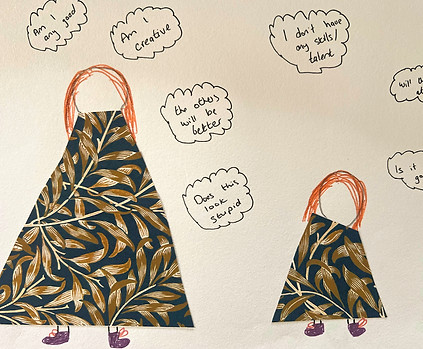
Creative approaches can access what words alone cannot. Whether your client reaches for a pencil, works with clay, or simply doodles on a page, something shifts emotions find shape, the unspeakable becomes visible, and the therapeutic process deepens in ways that talking alone rarely achieves.
These workshops are designed for counsellors and psychotherapists who are curious about working creatively but aren't sure where to start and for those who already use creative approaches and want to develop their practice further. No art training is needed.
Both workshops is exploring Art, Mark-making and drawing and how to introduce creative interventions in a safe and supportive way.

Really informative and laid out in a way that was easy to understand and access — and most importantly, to be able to bring it to practice. Emma has a lovely, gentle way and great energy. I loved the practical activities that could be used with adults using art and drawing.
Working creatively in therapy means inviting something beyond words into the therapeutic space. Through drawing, mark-making, collage, clay, or simple doodling, clients can express and explore experiences that are difficult or impossible to put into language.
This is not art therapy. Art therapy is a protected professional title in the UK, regulated by the HCPC, and requires specific postgraduate training. Working creatively draws on creative methods and interventions as part of your existing therapeutic practice within your current modality, training, and scope.
There is a neuroscientific basis for why this matters. Creating images and artwork is understood to be a predominantly right-brained activity engaging the brain regions associated with emotion, imagery, and sensory experience. Putting words to what has been created then brings in the left hemisphere,the analytical, language-processing side. When the two hemispheres work in tandem like this, the brain can process experience more holistically, bringing together feeling and meaning in a way that language alone rarely achieves.
For clients who have experienced trauma in particular, verbal processing alone can be limited, because trauma is often stored in ways that bypass language entirely. The act of creating an image can allow expression of internal experiences that simply have no words, and when combined with verbal reflection, supports a depth of integration that talking alone rarely achieves.
As you noted in my own practice, clients frequently say "I don't know why, but I want to draw..." and when they look at what they've created, they find they have given shape to something that had no language. Something nameless and faceless, now visible on the page in front of them.
Clients don't need to be artistic. You don't need to be artistic. What matters is curiosity, a safe therapeutic relationship, and the willingness to follow where the process leads.
.png)
An experiential introduction to creative approaches in the therapy room — covering the theory behind image-based work, how to set up sessions safely and ethically, using art in introductions and grounding as the foundation for creative therapeutic work.
Friday 18th Sept | 6 CPD Hours | NCPS Quality Assured|
Discount for NCPS members
These courses alone are not a route to the Accredited Register, nor does it equip a participant to refer to themselves as a qualified counsellor or as a 'specialist' in this area of work unless they have obtained relevant qualifications and experience to do so.
Are you curious about bringing creative approaches into your therapy room but not sure where to start? Download our free practical checklist — Setting Up Creative Work in Your Therapy Room — and get 14 essential steps to help you introduce creative work safely, ethically, and confidently with your clients. Enter your email below and I'll send it straight to you.
